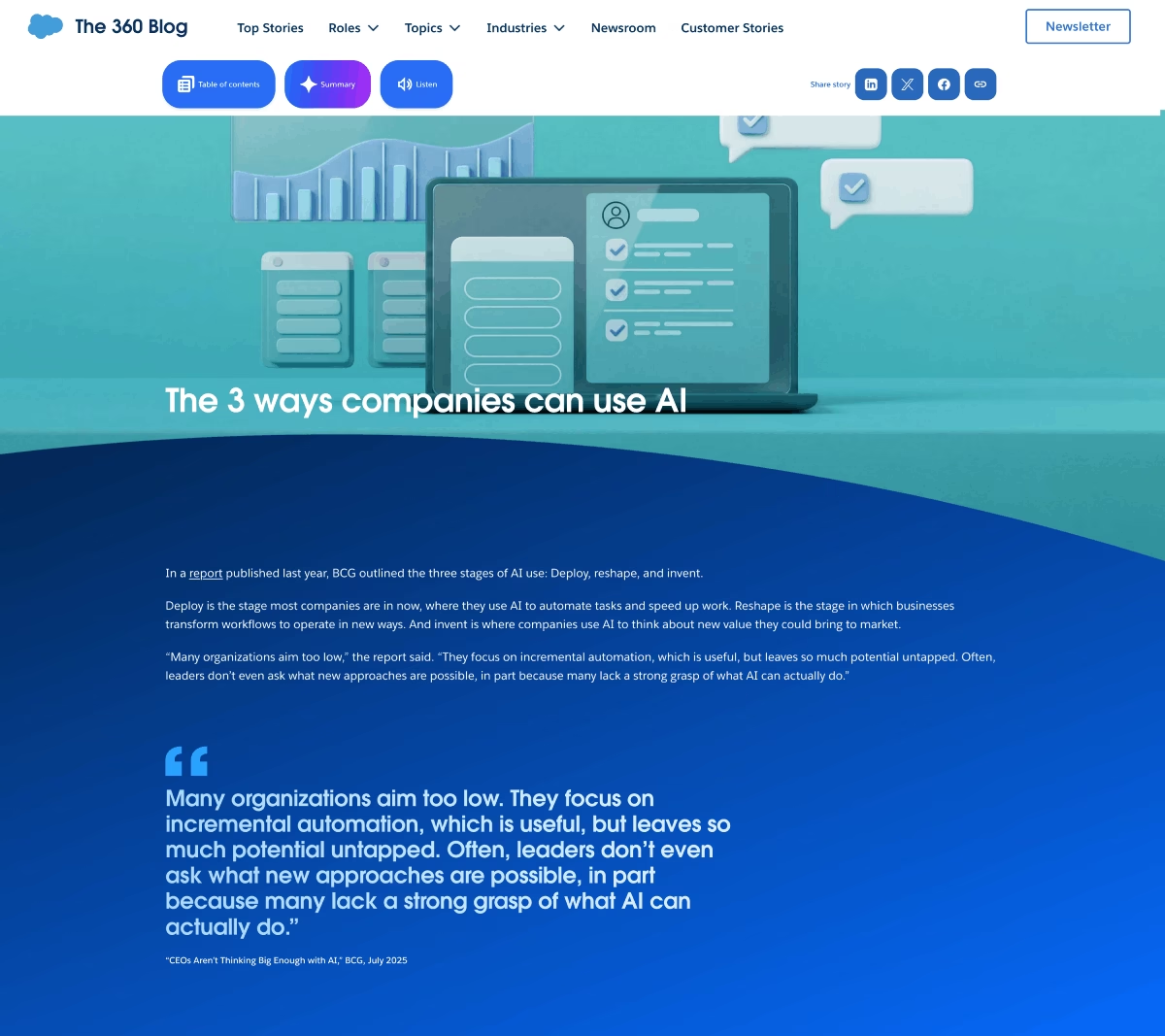
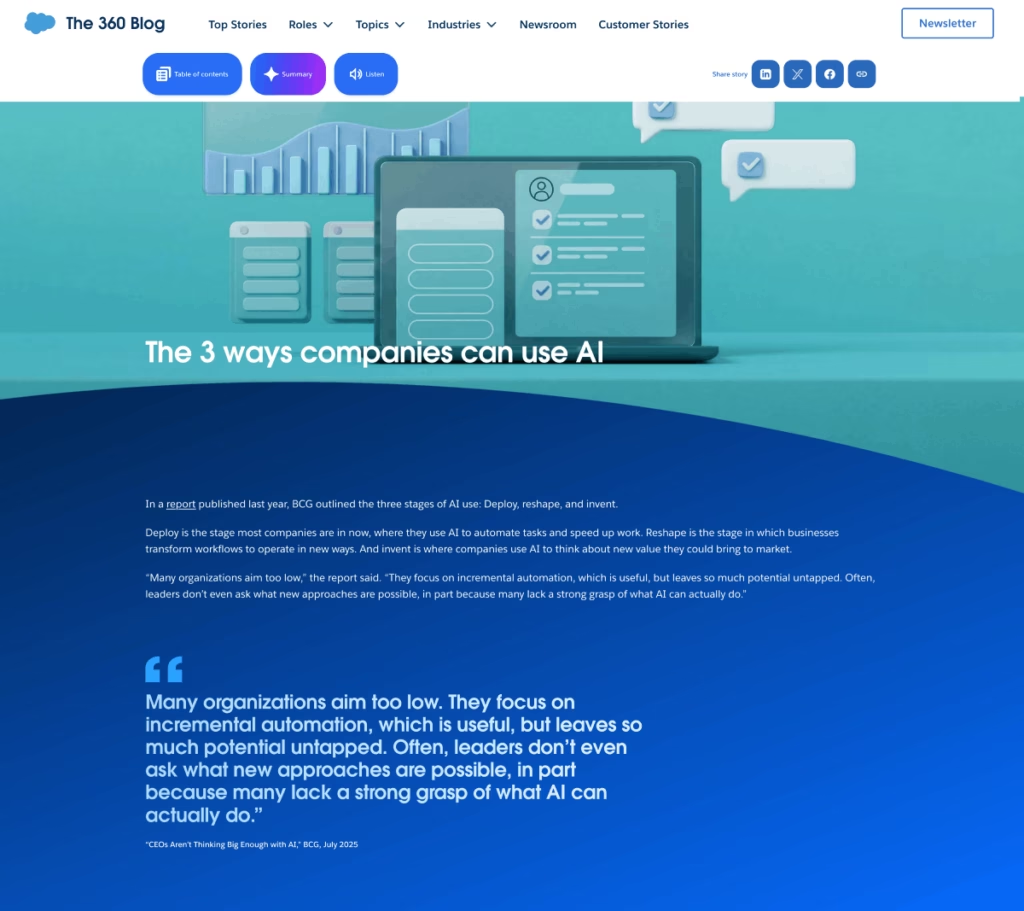
Delivered a production-grade “featurette” prototype to validate a new interactive editorial experience before formal requirements existed. Built with GSAP-driven interactions and structured as a modular, integration-ready system, the prototype aligned design, motion, and engineering in real time. This approach compressed time-to-market, reduced downstream engineering risk, and enabled teams to ship a high-impact experience without waiting for full platform changes. The approach influenced how cross-functional teams collaborated on similar initiatives moving forward, establishing a repeatable pattern for prototype → production workflows.
Full Case Study
Overview
To explore a new direction for interactive editorial content, I led the creation of a high-fidelity “featurette” prototype—a production-aligned implementation designed to validate interaction, layout, and motion early.
Rather than following a traditional sequence (design → spec → build), I positioned the prototype as a shared system artifact, enabling cross-functional teams to align, iterate, and converge in parallel. This shifted how design, motion, and engineering collaborated on experience-driven work.
Problem
The team needed to evaluate a new, interaction-heavy experience, but existing workflows were not designed for rapid validation.
- Design, motion, and engineering operated sequentially, slowing iteration
- Static mocks failed to capture real interaction behavior
- Lack of a shared implementation artifact created interpretation gaps
- There was no guarantee that proposed interactions would translate cleanly to production
This introduced risk:
- Delayed validation and longer time-to-market
- Increased likelihood of late-stage rework
- Misalignment between design intent and engineering feasibility
Constraints
- Timeline: Tight window to validate and deliver a new experience direction
- Team: Cross-functional collaboration across design, marketing, and engineering
- Technical: Needed to align with WordPress + Gutenberg constraints
- Business: Could not block on full system changes or re-architecture
- Ambiguity: No formal requirements; direction was exploratory
Approach
I approached this as a product direction and alignment problem, not just a prototyping task.
Instead of creating low-fidelity mocks, I:
- Built a production-level prototype to validate real behavior
- Treated the prototype as a system, not a demo
- Ensured it aligned with existing platform constraints
This enabled:
- Design to iterate on real interaction states instead of static mocks
- Motion/design partners to refine behavior with immediate feedback loops
- Engineering to validate feasibility before committing to builds
The prototype became the single source of truth, reducing ambiguity and enabling teams to work in parallel rather than in sequence.
Key Decisions & Tradeoffs
1. Fidelity vs Speed
- Decision: Build at production-level fidelity
- Tradeoff: Higher upfront effort vs eliminating downstream rework
2. Speed vs Structure
- Decision: Maintain modular, system-aware architecture
- Tradeoff: Slightly slower iteration vs enabling reuse and integration
3. Exploration vs Feasibility
- Decision: Constrain the prototype to real platform limitations
- Tradeoff: Reduced experimental freedom vs guaranteed implementability
4. Sequential vs Parallel Workflows
- Decision: Use the prototype as a shared artifact across teams
- Tradeoff: Required tighter collaboration vs significantly faster convergence
What I intentionally avoided:
- Low-fidelity or static prototypes
- Throwaway demos disconnected from production
- Waiting for finalized requirements before building
Execution
I owned the design and implementation of the featurette system, ensuring it could serve as both a validation tool and a production-ready foundation.
Key contributions included:
- Building a high-fidelity prototype modeling interaction, layout, and motion
- Implementing GSAP-based animation systems to simulate production behavior
- Structuring the implementation as a modular, reusable system
- Ensuring compatibility with WordPress/Gutenberg constraints for seamless handoff
- Partnering with design and marketing to iterate in real time and converge quickly
This approach allowed stakeholders to evaluate the experience as it would actually behave, not as an approximation.
Outcome / Impact
- Enabled rapid validation of a new experience direction
- Supported delivery of an interactive editorial experience on an accelerated timeline
- Reduced engineering risk by ensuring feasibility before full implementation
More importantly, this shifted team behavior:
- Cross-functional teams aligned around a shared, executable artifact instead of static specs
- Design, motion, and engineering began working in parallel rather than waiting on handoffs
- Stakeholders gained confidence earlier through real, testable implementations
This approach was later reused and informed how similar experience-driven initiatives were approached, establishing a pattern for prototype-led development across the team.
What This Enabled
- Faster iteration across design, motion, and engineering
- Ability to validate complex experiences before committing to full builds
- A clear, low-risk path from prototype → production
At a team level, it enabled:
- Parallel collaboration across disciplines
- Reduced ambiguity in early-stage product decisions
- A repeatable model for featurette-driven exploration and delivery
Key Takeaways
- Prototyping can drive product direction, not just visualize it
- Production fidelity upfront reduces downstream risk
- Shared artifacts align teams faster than documentation
- Changing how teams work is higher impact than shipping a single feature