What happens when you build software around the way your family actually lives?
I’ve spent a good portion of my career building software for other people. Recently, I started thinking more seriously about what it would look like to apply that experience to my own household.
Not another productivity app. Not another collection of reminders, calendars, and lists. Something designed specifically around the way my family operates, the things we struggle to keep organized, and the information we regularly need.
That experiment became Casa, a private household operating system.
The problem with managing a household
Running a household involves a surprising amount of coordination.
There are bills to track, groceries to buy, meals to plan, appointments to remember, things that need fixing, and responsibilities that need to be shared. There are also dozens of little pieces of information that someone in the house knows, but nobody has documented.
None of these are particularly complicated problems individually. The complexity comes from their relationships.
A meal plan affects the grocery list. Groceries affect the budget. A household project might require supplies, an available afternoon, and instructions someone wrote down six months ago.
Most existing applications handle one piece of that equation. Connecting everything becomes another responsibility.
I wanted to see what would happen if we treated the household as one connected system instead.
What Casa does
Casa brings several aspects of our household into a shared application, organized around four primary areas.
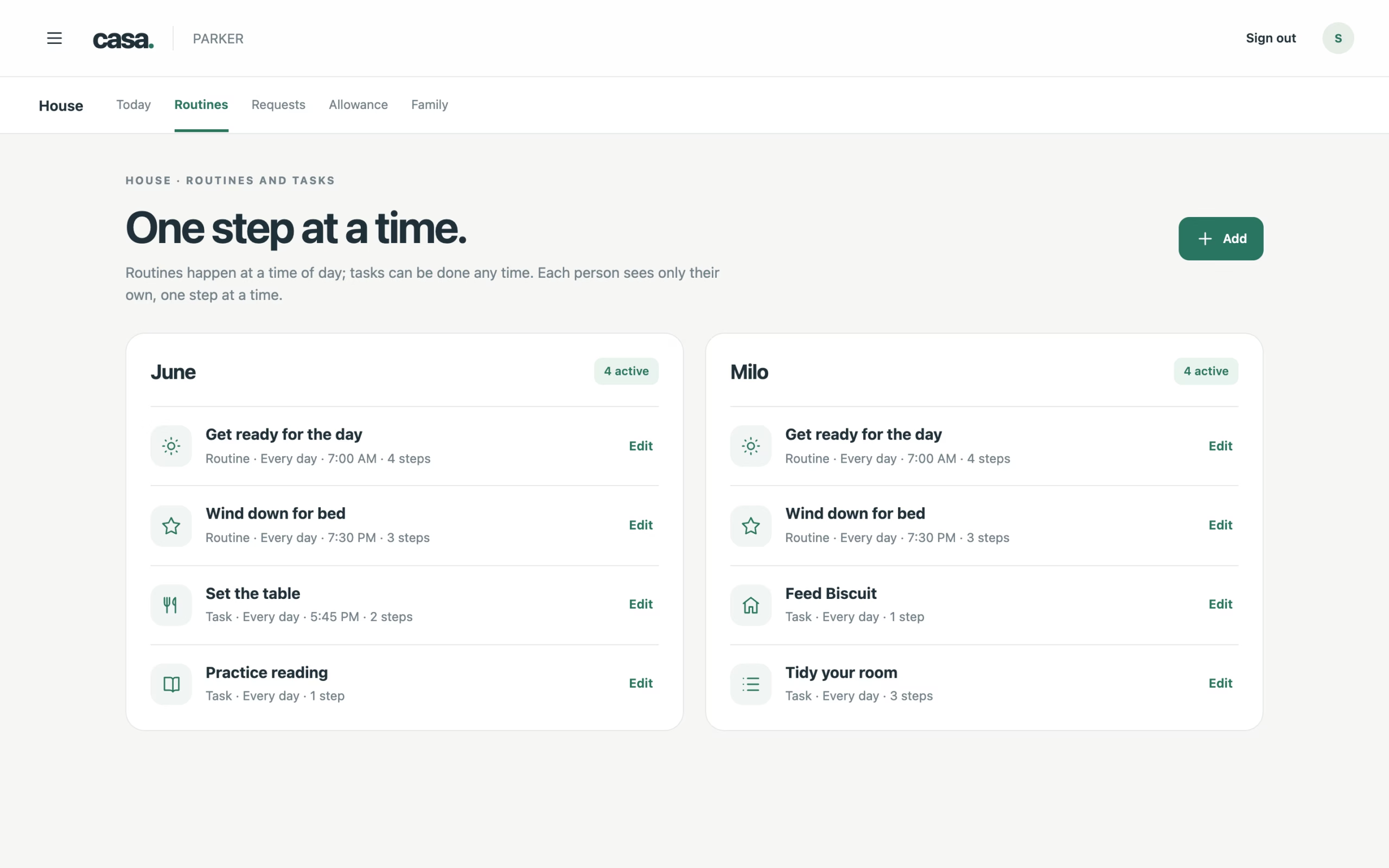
Household is where we coordinate responsibilities, schedules, tasks, and things that need attention. The goal is to make it easier to understand what’s happening, what matters, and what comes next.
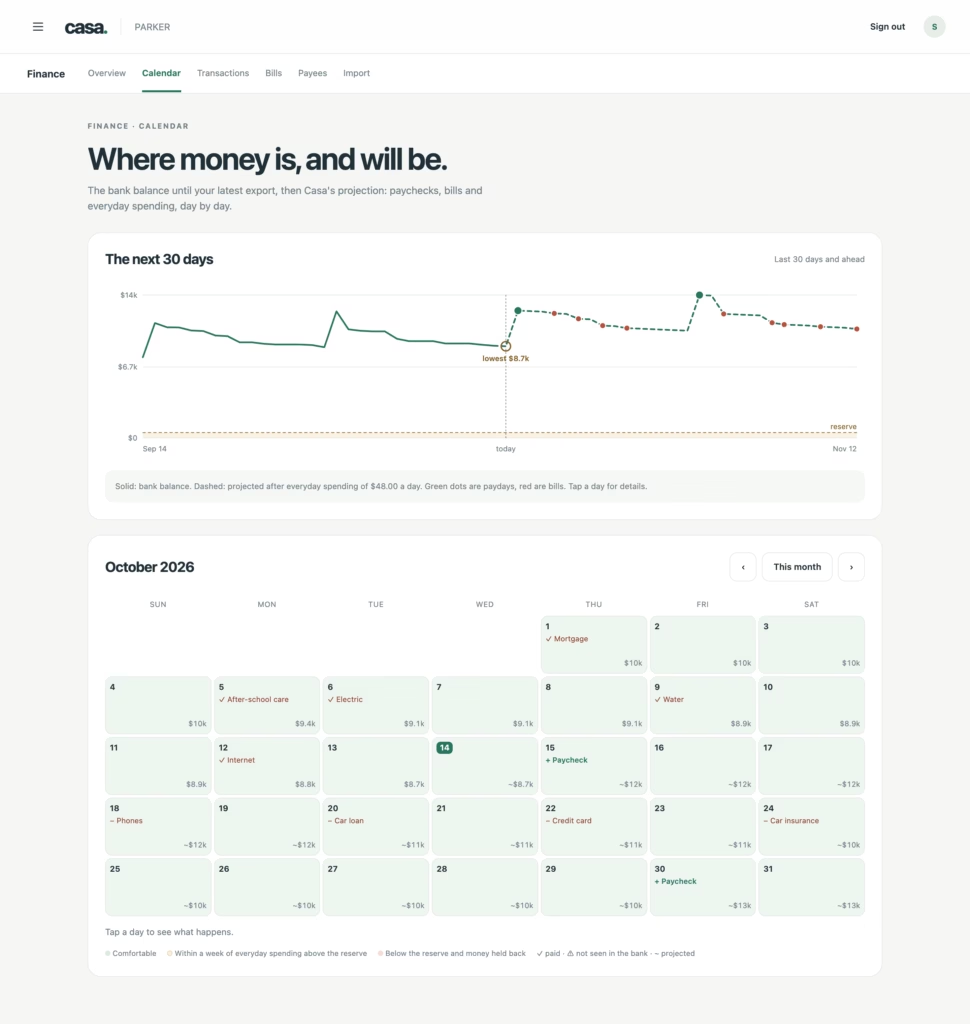
Finance provides a place to understand our household budget, recurring expenses, and spending. I’m interested in making financial information more actionable, rather than simply displaying transactions and balances.
Kitchen handles meal planning, groceries, and related household needs. It’s an area where small improvements in organization can eliminate a surprising amount of daily friction.
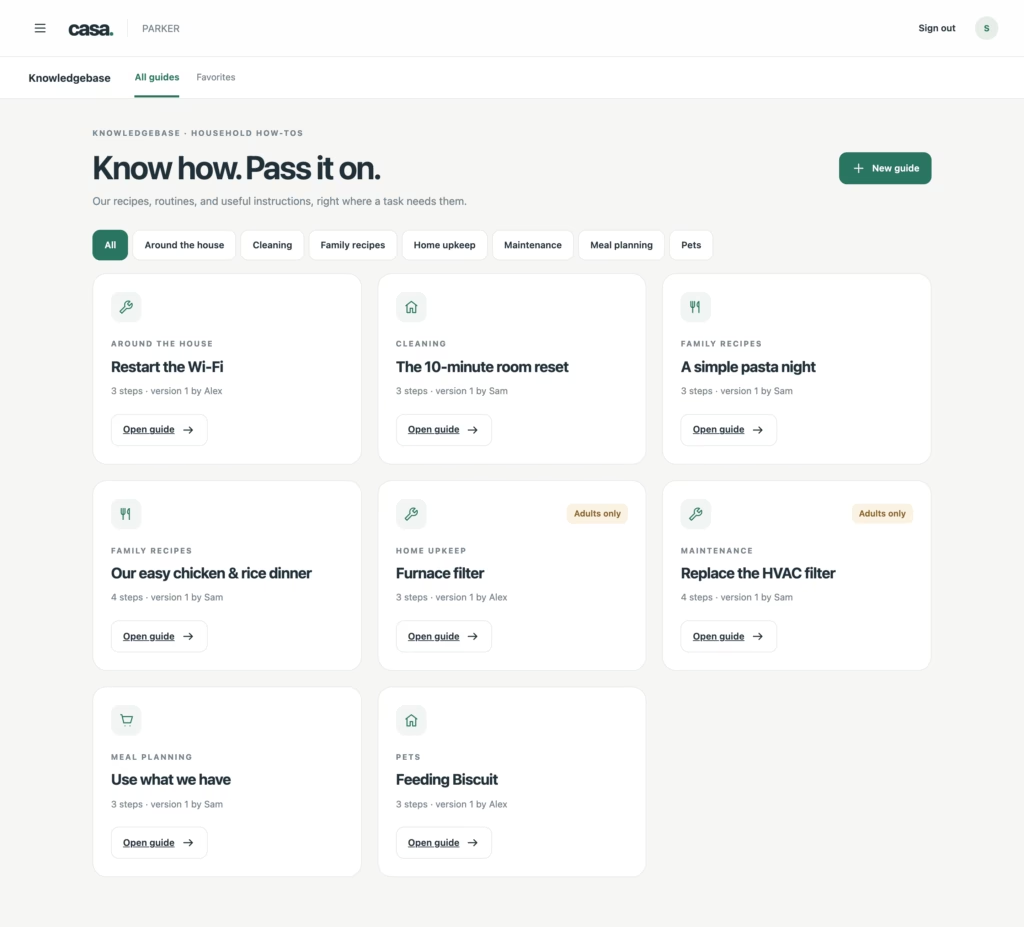
Knowledge is our shared reference library. Instructions, household procedures, useful information, and things we’ve learned can live somewhere accessible instead of being forgotten or repeatedly explained.
The interesting part isn’t necessarily any of these features on their own. It’s the opportunity for them to work together.
A household task can reference instructions. Planning meals can inform grocery needs. Spending can be understood in the context of what the household actually has planned.
Rather than jumping between disconnected tools, we’re building a shared understanding of what needs to happen.
Designing for the people who actually use it
One of my priorities with Casa is making it approachable for everyone in the house.
An application that helps me organize information isn’t particularly useful if everyone else finds it unpleasant or overwhelming.
Different people need different levels of detail. An adult managing household finances has different concerns than a child checking what they’re responsible for that afternoon.
I want the interface to respect those differences.
That means clear priorities, simple interactions, thoughtful presentation, and an intentional lack of noise.
I’m particularly interested in interfaces that make responsibilities feel manageable. Instead of presenting an intimidating list of everything that needs to be accomplished, what if software could help someone focus on the next useful action?
The experience should reduce the mental effort required to participate in running the household, not introduce more of it.
Building software for an audience of four
Something I’ve found interesting about this project is the freedom that comes from building for a very small, well-understood group of people.
Most software development involves making decisions that accommodate a broad audience. Features need to be generalized, workflows need to account for different organizations, and interfaces have to make sense to people you’ve never met.
Casa doesn’t have those constraints.
I can build something around actual behaviors, conversations, and frustrations. If a workflow doesn’t make sense for our family, I can change it. If something feels unnecessarily complicated, I can remove it.
AI-assisted development has also changed the practical scope of projects like this. Ideas that previously would have required significant development time can now be explored, implemented, and evaluated much more quickly.
That doesn’t eliminate the need for good engineering, architecture, or careful consideration of privacy and security. It does make creating highly personalized software far more realistic.
And I think that’s worth exploring.
Where I want to take it
Casa is functional, but it’s still an evolving project.
My immediate goal isn’t to accumulate features. It’s to find out whether a purpose-built application can genuinely make our day-to-day lives easier.
There are a few principles I want to preserve as it grows:
- Less mental overhead. Important information shouldn’t have to live in someone’s head.
- Shared responsibility. Everyone should have an appropriate way to participate.
- Useful connections. Information should be available where it’s relevant, without unnecessary duplication.
- Privacy by design. Household information should remain private, with security treated as a fundamental requirement.
- Adaptability. The software should change with our needs rather than forcing us into a fixed process.
Longer term, I’m interested in how the system might become more proactive: helping us recognize upcoming needs, make better decisions, and understand patterns that aren’t obvious when information is scattered across different places.
Not to automate every aspect of family life, but to remove some of the administrative work surrounding it.
A different relationship with software
The bigger idea behind Casa is something I’ve been thinking about beyond this project.
For a long time, using software has largely meant finding an existing product that’s close enough to what you need, then adapting your habits around it.
We’re approaching a point where building something specifically for yourself is becoming a practical alternative.
That raises some interesting questions.
What does personal software look like when it doesn’t need to appeal to millions of users? What happens when the people using an application can directly influence its development? How much complexity could we eliminate by building tools around actual needs rather than generalized assumptions?
Casa is my opportunity to explore those questions at home.
If it succeeds, the result probably won’t be particularly dramatic. It’ll mean fewer things forgotten, fewer repeated conversations, better coordination, and a little less stress.
For a household, that would be a pretty meaningful improvement.